
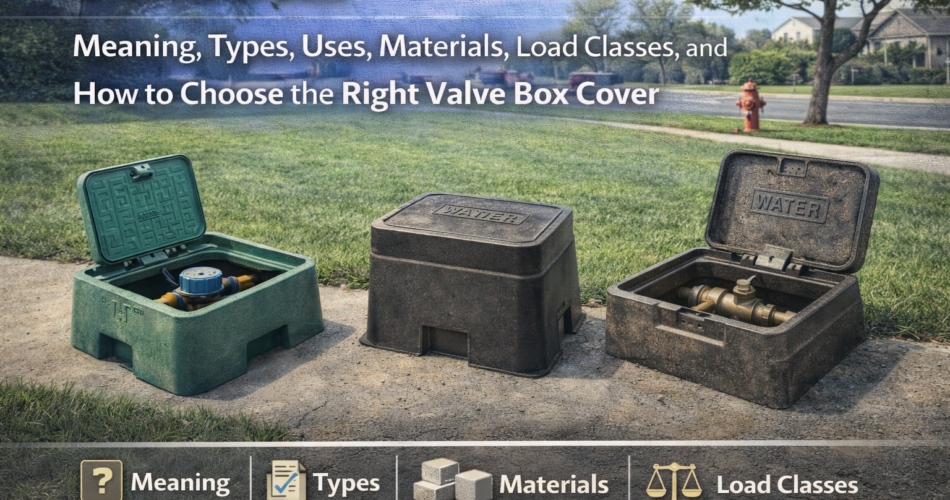
A valve box is a protective access enclosure installed above underground water pipeline valves (sluice valves, gate valves, stop valves) so operators can open/close valves for maintenance, isolation, and emergency shutdown—without excavating roads or footpaths.
In municipal and industrial infrastructure, valve boxes are used everywhere because they protect critical control points and keep service restoration fast.
What Is a Valve Box?
A valve box is typically a cast iron or ductile iron (SG iron) frame with a cover/lid, placed at ground level over a valve chamber or valve spindle location. It provides:
- safe access for operation (using a valve key)
- protection from traffic loads, impact, and water ingress
- reduced risk of valve damage or misalignment
- optional locking to prevent tampering
Valve boxes are also searched as:
- Water valve box
- Sluice valve box
- Gate valve box
- Stop cock box
- Valve box cover and frame
- DI valve box / Cast iron valve box
Where Valve Boxes Are Used
Municipal Water Supply
- distribution line isolation valves
- zone-wise shut-off points
- pipeline maintenance and repair access
Industrial Utilities
- plant water pipelines
- process line isolation valves
- utility corridors and service networks
Housing & Commercial Projects
- internal water distribution networks
- fire line / hydrant isolation valves
- campus water supply systems
Types of Valve Boxes
1) Round Valve Box
- most common for water valve access
- aligns well with valve spindle/key access
- stable installation in footpaths/roadsides
2) Square / Rectangular Valve Box
- used when chamber design needs it
- common in utility corridors and multi-fitting access points
3) Adjustable / Telescopic Valve Box
- height adjustable for road resurfacing and level changes
- ideal for urban roads where levels change over time
4) Lockable Valve Box (Anti-Tamper)
- prevents unauthorized valve operation
- useful in public areas and critical networks
5) Heavy Duty Valve Box
- designed for roadside and traffic zones
- higher load class cover + stronger frame seating
Materials: Cast Iron vs Ductile Iron (SG Iron) Valve Boxes
Cast Iron Valve Box
- economical option
- suitable for pedestrian/light-load areas (based on design & class)
Ductile Iron (SG Iron) Valve Box
- higher tensile strength and impact resistance
- better for traffic zones and areas with dynamic loads
- longer service life and lower failure risk
If the valve box is on or near a road, ductile iron is usually the safer and more durable choice.
Load Classes (EN124) for Valve Box Covers
Choose load class based on installation location:
- A15: pedestrian areas, parks, footpaths
- B125: driveways, light parking areas
- C250: kerbside and roadside zones
- D400: carriageways, roads with heavy traffic
Most valve boxes on footpaths are A15/B125, while kerbside installations often need C250. For road installations, D400 is the correct requirement.
Key Features to Look For in a Quality Valve Box
- Proper seating & anti-rattle fitment (reduces noise and movement)
- Clear marking (VALVE / WATER / SV / GV as per requirement)
- Corrosion protection (bitumen/epoxy/powder coating)
- Strong frame design for long-term stability
- Adjustability (telescopic type) for future road level changes
- Locking option for safety and anti-theft/tamper control
How to Choose the Right Valve Box (Quick Checklist)
Before purchase/specification:
- Valve type: sluice/gate/stop/hydrant line valve
- Location: footpath / roadside / road / industrial
- Traffic load: pedestrian vs vehicle vs heavy-duty
- Load class: A15/B125/C250/D400
- Size: clear opening + frame size as per chamber/spindle
- Height: fixed or adjustable/telescopic
- Marking: WATER / VALVE / SV / GV
- Safety need: lockable or standard
If you install a low-class cover in a traffic zone, it will fail sooner or later—this is specification error, not “maintenance issue.”
Conclusion
Valve boxes are essential for maintaining reliable water supply networks. The correct selection depends on material, load class, sizing, and installation location. For long-term performance, pick the right EN124 class and consider ductile iron for roadside/traffic applications.