
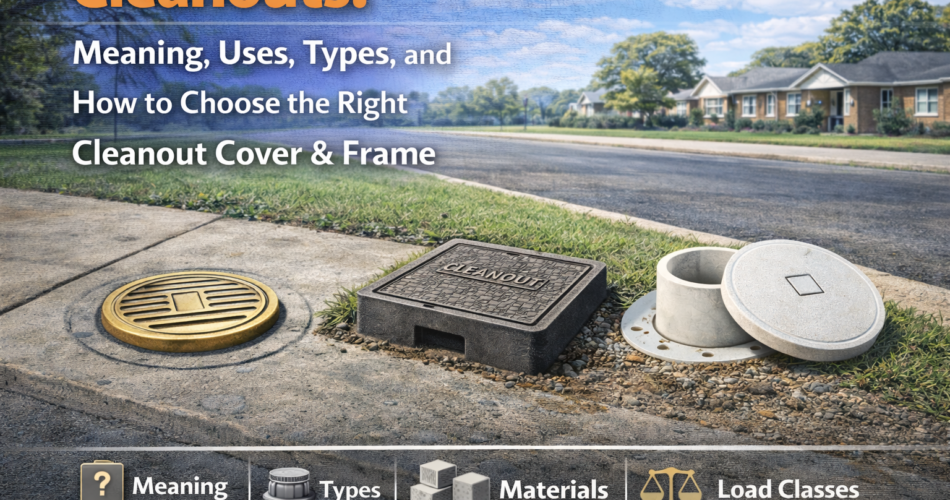
Cleanouts are access points provided in sewer, drainage, and plumbing pipelines to allow quick inspection, rodding, jetting, and cleaning of blockages—without breaking the pipe line or excavating the area. In municipal and industrial drainage networks, cleanouts reduce maintenance time, prevent overflow incidents, and make routine cleaning safer and cheaper.
Cleanouts are commonly installed with cleanout covers (inspection covers) made in cast iron or ductile iron (SG iron) depending on location and load.
What Are Cleanouts?
A cleanout is a small access opening connected to a drain/sewer line, typically brought up to ground level and closed with a cleanout cover. Maintenance teams use it to:
- remove chokes and blockages
- inspect flow conditions
- perform rodding or pressure jetting
- clear silt, grease, sludge, and debris buildup
Cleanouts are also searched as:
- Drain cleanout
- Sewer cleanout
- Inspection cover
- Cleanout cover and frame
- Plumbing cleanout cap
- Drainage cleanout access cover
Where Cleanouts Are Used
Municipal & Drainage Networks
- stormwater drains
- sewer lines (inspection/maintenance points)
- roadside drainage pipelines
- culverts and civic drainage corridors
Buildings & Plumbing
- residential drainage lines
- commercial buildings and basements
- kitchens (grease line cleanouts)
- toilets and soil lines
Industrial Applications
- process drainage lines
- effluent and utility drains
- wash-down areas and industrial stormwater systems
Why Cleanouts Are Important
- Faster blockage removal (no digging required)
- Lower maintenance cost and reduced downtime
- Prevents backflow and overflow during heavy use or rain
- Improves pipeline life through routine cleaning
- Better compliance and hygiene in public and industrial areas
If a drainage line has no cleanouts, maintenance becomes slow, expensive, and destructive.
Types of Cleanouts
1) Pipe Cleanout (Vertical Access)
Most common type; provides direct access to the pipeline.
2) Floor Cleanout
Used inside buildings, basements, kitchens, and wash areas—installed flush with flooring.
3) Road/External Cleanout with Heavy Duty Cover
Used in public areas where vehicles or foot traffic pass over the cover.
4) Grease Line Cleanout
Used in kitchens and food facilities where grease build-up is common.
5) Sewer/Drainage Inspection Cleanout
Used at strategic intervals for sewer and municipal drainage maintenance.
Cleanout Covers: Cast Iron vs Ductile Iron (SG Iron)
Cast Iron Cleanout Covers
- economical option
- suitable for pedestrian/light-load areas when correctly specified
Ductile Iron (SG Iron) Cleanout Covers
- higher tensile strength and impact resistance
- preferred for roadside/parking/traffic zones
- longer service life under dynamic loads
If the cleanout is installed in an area where vehicles may pass, ductile iron covers are usually the correct selection.
Load Classes (EN124) for Cleanout / Inspection Covers
Cleanout covers installed at ground level should match location load:
- A15: pedestrian areas, footpaths, parks
- B125: driveways and light parking areas
- C250: kerbside/roadside zones
- D400: roads and carriageways
A common mistake is using a light-duty cover in a traffic zone—this leads to cracking, settlement, and safety risk.
Key Features of a Good Cleanout Cover & Frame
- Flush fitment (prevents tripping and water stagnation)
- Strong seating (prevents rocking/rattling)
- Non-slip surface for safety
- Correct clear opening for rodding/jetting tools
- Marking options (DRAIN/SEWER/CO as required)
- Locking option where tampering is a concern
- Corrosion protection (optional epoxy/powder coating)
How to Choose the Right Cleanout
Use this checklist:
- Application: sewer/stormwater/plumbing/grease line
- Location: indoor floor / footpath / roadside / road
- Traffic load: pedestrian vs vehicle
- Load class: A15/B125/C250/D400
- Size: opening must allow easy maintenance access
- Cover type: standard vs sealed vs lockable
- Material: SG iron recommended for traffic areas
If you oversimplify cleanouts as “small covers,” you’ll end up with wrong sizing and maintenance headaches later.
Conclusion
Cleanouts are small but critical access points that keep drainage and sewer systems maintainable. With the right cover & frame, correct load class, and proper installation, cleanouts reduce blockage issues, prevent overflow incidents, and extend pipeline life.