
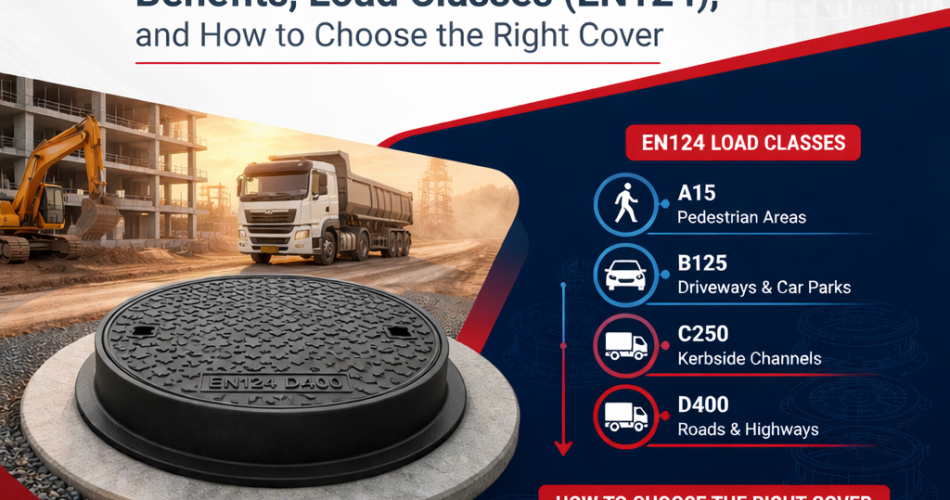
A catch basin is a critical component in stormwater and surface drainage networks. Its main job is simple but important: collect rainwater runoff, trap silt and debris, and direct cleaner water into the drainage line. In cities, industrial zones, highways, and commercial complexes, catch basins help prevent waterlogging, road damage, and drain blockages—especially during heavy rainfall.
If your drainage design is weak, the result is obvious: flooded roads, blocked drains, and high maintenance costs. A properly designed catch basin avoids that.
What Is a Catch Basin?
A catch basin is a drainage chamber placed at low points where water accumulates—near kerbs, parking areas, road edges, courtyards, and industrial yards. It typically includes:
- Inlet opening (often with a grating)
- Basin/chamber below ground
- Sump depth to trap silt and debris
- Outlet connection to the stormwater drain line
The sump holds sand, silt, leaves, plastic, and other debris so it doesn’t move into the pipeline and cause choking.
Why Catch Basins Are Used
Catch basins aren’t optional in serious drainage work. They provide:
- Flood prevention: Helps remove surface water quickly from roads and paved areas.
- Debris control: Traps silt and garbage before it enters the drainage line.
- Reduced maintenance: Less choking means fewer emergency clean-ups.
- Protection of drains: Extends pipeline life by reducing abrasion from sand and grit.
- Improved hygiene: Prevents stagnant water and foul smell issues in open areas.
Common Applications of Catch Basins
Catch basins are widely used in:
- Municipal stormwater drainage
- Roads, highways, and carriageways
- Parking lots and commercial complexes
- Industrial plants and logistics yards
- Residential townships and campuses
- Ports, airports, and heavy paved areas
Anywhere surface water runoff is high, a catch basin is a basic requirement.
Catch Basin vs Gully Trap (Simple Difference)
People often confuse these terms:
- Catch Basin: For stormwater runoff; focuses on debris and silt trapping.
- Gully Trap: Typically used in wastewater plumbing; blocks foul gases and odour.
For roads and rainwater systems, you usually need a catch basin—not a gully trap.
Catch Basin Gratings: Why Material Matters
The top grating is the working surface, and it must handle real loads.
Cast Iron Gratings
- Good for standard municipal and medium-load areas
- Cost-effective with proper casting quality
Ductile Iron (SG Iron) Gratings
- Higher strength and impact resistance
- Better for heavy-traffic roads and industrial zones
- Lower risk of cracking under repeated load
For high-traffic carriageways, ductile iron gratings are typically the safer choice.
Key Quality Factors to Check Before Buying Catch Basin Covers/Gratings
If you’re sourcing catch basin products, don’t ignore these points:
- Load rating: Must match the installation zone (footpath vs roadway vs heavy vehicle).
- Anti-slip pattern: Prevents skidding, especially during rain.
- Proper seating: Tight fit reduces noise, rocking, and premature damage.
- Corrosion protection: Coatings like epoxy extend life in wet conditions.
- Dimensional consistency: Ensures faster installation and fewer site issues.
- Standard compliance: Choose products made and tested as per project requirements.
If load rating is wrong, the grating will fail—and when it fails, it becomes a safety hazard.
Maintenance Tip
Catch basins work only if they’re cleaned periodically. Debris builds up in the sump and eventually blocks water flow. A simple cleaning schedule before monsoon season dramatically reduces flooding complaints and emergency breakdowns.
Conclusion
A catch basin is one of the smartest investments in any stormwater drainage system. It improves water flow, traps debris, reduces drain choking, and protects roads and infrastructure from water damage. Whether the site is a municipal road, industrial yard, commercial parking lot, or highway, selecting the right catch basin design and a properly rated grating ensures long-term performance and lower maintenance costs.
If you want reliable catch basin gratings and covers, choose products built for real load conditions, manufactured with controlled quality, and designed to deliver safe drainage performance year after year.