
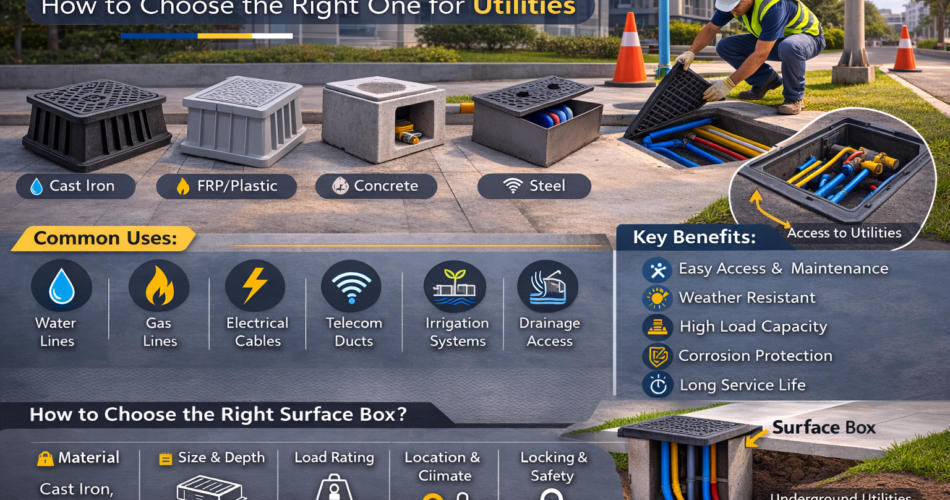
A surface box is a protective access enclosure installed at ground level to provide quick and safe access to underground utility valves and controls—without digging. Surface boxes are widely used in water supply lines, fire hydrant systems, industrial pipelines, and municipal utility networks where frequent operation, inspection, or emergency shut-off is required.
If your project has underground valves and you don’t provide a proper surface box, you’re basically guaranteeing future damage, delays, and higher maintenance cost.
What Is a Surface Box?
A surface box is a frame-and-lid access unit placed over a valve spindle or operating point. It protects the valve key access from:
- soil and debris entry
- accidental damage from vehicles
- water ingress and corrosion buildup
- tampering (in lockable variants)
Surface boxes typically include:
- Top lid/cover
- Frame
- Operating hole (for valve key)
- Extension arrangement (optional, depending on depth)
Where Surface Boxes Are Used
Surface boxes are common in:
- Municipal water supply valve chambers
- Fire hydrant pipelines
- Commercial and residential water distribution networks
- Industrial plant utility lines
- Irrigation and agricultural pipelines
- Utility corridors and infrastructure projects
Anywhere a valve needs to be operated from the surface, a surface box becomes a basic requirement.
Key Benefits of Using a Surface Box
A properly selected surface box offers:
- Fast access to valves: No breaking roads or opening chambers for routine operation.
- Protection for valve components: Keeps sand, stones, and debris away from valve head/spindle.
- Safer maintenance: Clear access reduces on-site hazards and time.
- Better durability in traffic areas: Heavy-duty surface boxes resist cracking and displacement.
- Cleaner infrastructure appearance: Neat utility access without open pits or makeshift covers.
Types of Surface Boxes
Surface boxes are generally selected based on application and installation area:
- Round Surface Box
- Common for municipal water valves
- Easy alignment and installation
- Square/Rectangular Surface Box
- Used where space/access needs are wider
- Often preferred in industrial utility zones
- Light Duty Surface Box
- For footpaths, gardens, low-load areas
- Medium/Heavy Duty Surface Box
- For roads, driveways, and vehicular movement areas
- Lockable Surface Box (Optional)
- Helps prevent tampering or unauthorized operation
- Useful in public zones and high-risk locations
Cast Iron vs Ductile Iron (SG Iron) Surface Boxes
Material choice impacts both strength and lifespan:
Cast Iron Surface Box
- Suitable for many standard municipal applications
- Cost-effective when load conditions are moderate
Ductile Iron (SG Iron) Surface Box
- Higher impact strength and durability
- Better for traffic zones and long-life utility networks
- Lower risk of cracking under shock loads
For road installations or heavy use areas, ductile iron usually gives better long-term performance.
How to Choose the Right Surface Box (Practical Checklist)
Before buying or specifying a surface box, check:
- Load requirement: Footpath vs driveway vs roadway—this decides duty class.
- Installation depth: Match valve depth; extension pieces may be needed.
- Lid design: Ensure secure seating and easy operation access.
- Anti-slip top: Important in wet conditions and public walkways.
- Corrosion protection: Coating/finish should suit outdoor exposure.
- Fit and stability: Poor seating leads to rattling, movement, and early failure.
If you ignore load and depth, you’ll end up with broken lids or buried access points—both are avoidable mistakes.
Common Problems Caused by Low-Quality Surface Boxes
These failures show up quickly in real sites:
- Lid cracking under vehicle load
- Lid getting stuck due to rust and poor finish
- Surface box sinking or shifting from weak frame design
- Constant rattling because of poor seating
Most of these problems come from choosing the wrong grade—not from “bad luck.”
Conclusion
A surface box is a small but crucial element of utility infrastructure. It protects underground valves, improves access, speeds up maintenance, and reduces long-term operating cost. Whether for municipal water networks, industrial pipelines, or fire hydrant systems, selecting the correct duty class, material, and design ensures safe and reliable service for years.
If you want surface boxes that survive real-site conditions, choose products built for proper load rating, manufactured with controlled quality, and designed for stable installation—not just the cheapest option.