
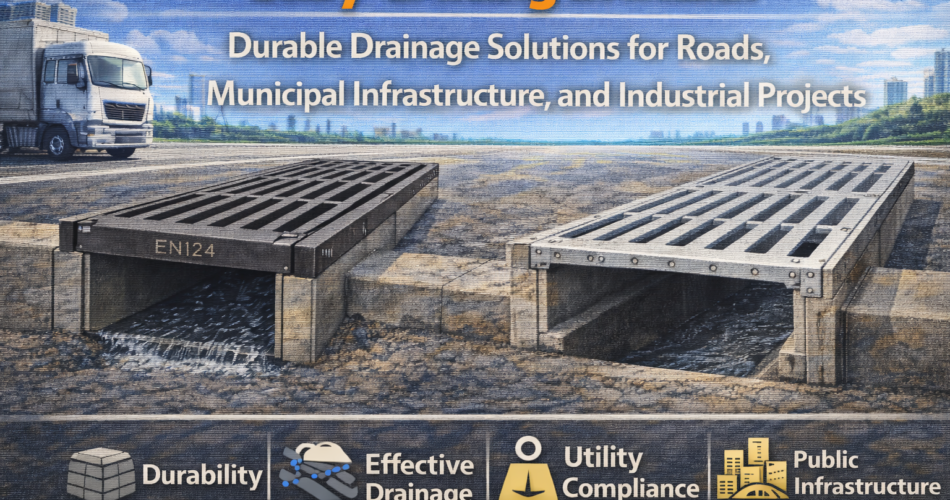
The demand for reliable gully grating in India continues to grow as cities expand, infrastructure projects increase, and drainage performance becomes more important across public, commercial, and industrial environments. A gully grating is not just a metal cover placed over a drain. It is a functional infrastructure component that helps manage surface water, improve safety, and protect drainage systems from large debris and misuse.
That is why product quality matters. Poorly manufactured gratings create real problems: breakage, loose fitting, unsafe surfaces, blocked drainage, and repeated replacement costs. Buyers who treat gully gratings like cheap commodity items usually end up paying more later through maintenance issues and site-level failures. The smarter move is to source from a manufacturer that understands casting quality, drainage applications, and long-term infrastructure performance. That is where Aris Foundry becomes relevant.
What Is Gully Grating?
A gully grating is a drainage cover installed over a gully or surface water collection point. Its purpose is to allow rainwater or runoff to enter the drainage system while helping prevent larger solids, waste, and debris from falling directly into the chamber below.
These products are commonly used in:
Roadside drainage systems
Gully gratings help collect stormwater from roads, streets, and carriageways to reduce water accumulation.
Municipal and civic infrastructure
Urban drainage networks rely on gully gratings to support public water management and surface safety.
Industrial premises
Factories, warehouses, and utility-heavy sites use gully gratings to manage runoff and operational water movement.
Commercial and institutional projects
Parking areas, campuses, building perimeters, and service zones often require drainage systems protected by durable gratings.
In short, a gully grating has to do two jobs properly: support water flow and withstand real surface conditions.
Why Gully Grating Matters in India
The need for gully grating in India is tied directly to real infrastructure conditions. Roads, public spaces, industrial sites, and urban developments all need reliable drainage support. When surface water is not collected properly, the result is predictable: waterlogging, unsafe movement, pavement deterioration, blocked drains, and higher maintenance burden.
Across India, gully gratings are especially important because of:
- Seasonal rainfall and runoff management needs
- Growing urban infrastructure
- Municipal drainage network requirements
- Industrial and commercial site drainage needs
- Public safety concerns in high-use environments
A weak grating does not remain a small defect. It becomes a visible infrastructure problem.
What Makes a Good Gully Grating?
Too many buyers focus only on the quotation amount and ignore the product’s actual performance requirement. That is lazy procurement. In drainage products, bad quality shows up fast.
A good gully grating should offer:
Structural strength
It should withstand expected use conditions, whether in pedestrian zones, public roads, or industrial sites.
Proper drainage function
The grating design should allow effective water entry without unnecessary blockage.
Dimensional accuracy
Poorly fitting gratings create instability, unsafe seating, and maintenance trouble.
Outdoor durability
Gully gratings remain exposed to rain, dirt, mud, waste, traffic conditions, and long-term environmental wear.
Consistent quality
For infrastructure and repeat projects, one acceptable batch is not enough. Quality must remain stable over time.
If the product cannot handle these basics, it is not fit for serious use.
Gully Grating in India for Municipal and Industrial Applications
The market for gully grating in India serves multiple sectors because drainage is a universal infrastructure need. These products are relevant in both public and private projects where water collection and surface safety matter.
Municipal drainage systems
Used in roads, streets, walkways, and public drainage networks to support stormwater collection and urban water flow.
Industrial facilities
Factories and industrial campuses require drainage systems that can manage operational runoff, washdown water, and surface water accumulation.
Commercial developments
Shopping areas, parking zones, office campuses, and mixed-use developments often require durable grating systems for site drainage.
Public works and infrastructure projects
Road construction, utility upgrades, and civic development works frequently include drainage points protected by gully gratings.
This is why the product cannot be sourced casually. It has to match the application and perform over time.
Material Choice for Gully Grating
Material selection plays a major role in long-term drainage performance. For infrastructure applications, cast iron and ductile iron remain widely preferred because of their strength, durability, and suitability for demanding outdoor service.
Cast iron gully grating
Cast iron is commonly used where rigidity, structural stability, and long service life are important.
Ductile iron gully grating
Ductile iron is often selected where better toughness and improved mechanical performance are needed.
The right material depends on the load condition, installation environment, traffic exposure, and project requirement. A serious manufacturer should guide this based on real use conditions, not just push the lowest-cost option.
Aris Foundry’s Strength in Drainage and Infrastructure Castings
Aris Foundry is an ISO 9001:2015 certified foundry engaged in the manufacture of quality grey iron and ductile iron castings in West Bengal, India. Its profile is directly linked to infrastructure, public works, utility, water, and construction applications, which makes it a relevant manufacturing partner for buyers seeking dependable gully grating in India.
What matters here is not generic marketing language. It is actual production capability.
Large-scale manufacturing facility
Aris Foundry operates from a state-of-the-art manufacturing and machining facility spanning approximately 200,000 square feet.
Strong annual melting capacity
With an annual melting capacity of 12,000 MT per year, the foundry has the scale to support both regular and project-based casting requirements.
Multiple moulding lines
The facility includes multiple moulding lines that support flexibility across a range of casting sizes and product specifications.
Sand handling and testing systems
Consistent casting quality depends on controlled production processes, including proper sand handling and testing.
In-house laboratory support
Chemical and physical testing capability, along with load-related testing support, strengthens quality control.
In-house machining and fabrication
Where customers need more than raw castings, in-house machining and fabrication capability add practical value.
These are the factors that serious buyers should care about. Without manufacturing depth, supplier claims mean very little.
Why Quality Control Matters in Gully Grating
Drainage products work in live conditions, not in brochures. That means bad quality becomes obvious quickly. Misfitting gratings, weak castings, unstable seating, or poor drainage performance all turn into site-level trouble.
That is why buyers should evaluate:
Product fit and finish
A proper gully grating should sit securely and integrate well with the drainage structure.
Material reliability
The casting should perform under real water, dirt, traffic, and environmental conditions.
Consistent batch quality
Repeat supply should not vary from one order to another.
Application suitability
The manufacturer should understand where a specific gully grating design works best.
Cheap products often fail in one or more of these areas. That is the real reason buyers should stop buying blindly on price.
Benefits of Choosing the Right Gully Grating
When properly manufactured and matched to the site requirement, a gully grating offers several practical benefits.
Better drainage performance
It helps collect and direct surface water more effectively.
Improved surface safety
It reduces the risk of open drainage hazards in active pedestrian or vehicular areas.
Reduced maintenance issues
A durable grating can lower replacement frequency and reduce avoidable site repairs.
Better infrastructure reliability
Strong drainage products support longer-term performance of the wider drainage network.
Long-term value
A quality product usually costs less over time than a weak one that fails early.
That is basic operational logic. Cheap failure is not savings.
Why Experience Matters in Foundry Manufacturing
Foundry manufacturing is technical work. It depends on process control, mould quality, material behavior, dimensional stability, inspection, and repeat consistency. Experience affects all of it.
Aris Foundry brings more than 35 years of industry experience. That matters because experienced foundries are better positioned to manage:
- Product development
- Casting feasibility
- Quality control
- Customer-specific requirements
- Repeat supply consistency
- Infrastructure-oriented manufacturing needs
For buyers, this reduces risk. And in infrastructure procurement, reducing risk is usually more valuable than chasing the lowest rate.
Custom Support for Project Requirements
Not every drainage project needs the same gully grating. Size, opening pattern, load requirement, frame type, and installation conditions can vary depending on the project.
Aris Foundry highlights its in-house design and engineering capability, which is useful for buyers requiring tailored casting solutions. For businesses looking for gully grating in India, this matters when standard supply does not fully match the project requirement.
Benefits of custom support
Custom development can help buyers:
- Match gratings to technical drawings
- Improve installation compatibility
- Support project-specific drainage layouts
- Reduce field modification issues
- Improve long-term functionality and fit
That is the kind of support that separates a real manufacturer from a basic trader.
How to Choose the Right Gully Grating Supplier in India
If you are sourcing gully gratings, do not reduce the decision to a lowest-quote comparison. That approach usually creates more downstream cost than it saves.
Instead, evaluate the supplier on what actually matters:
Real manufacturing capability
Do they have proper foundry infrastructure?
Quality systems
Are testing and process control built into production?
Material understanding
Can they recommend the right product type for the intended application?
Product consistency
Can they maintain repeat quality across supply cycles?
Technical support
Can they handle project-specific or custom requirements if needed?
Those are the right questions. Everything else is secondary.
Conclusion
The demand for dependable gully grating in India is closely tied to the performance of roads, drainage systems, public infrastructure, industrial premises, and commercial developments. Buyers need products that are strong, dimensionally reliable, durable, and designed for real service conditions.
With its ISO-certified foundry operations, large-scale manufacturing setup, in-house testing and machining support, and decades of experience in infrastructure-oriented castings, Aris Foundry is well positioned to serve buyers looking for reliable gully grating solutions in India.
The bottom line is simple. Gully grating is not a low-priority drainage accessory. It is a functional infrastructure component that directly affects safety, drainage efficiency, and long-term site performance. Source it from a foundry that is actually equipped to deliver quality where it matters.