
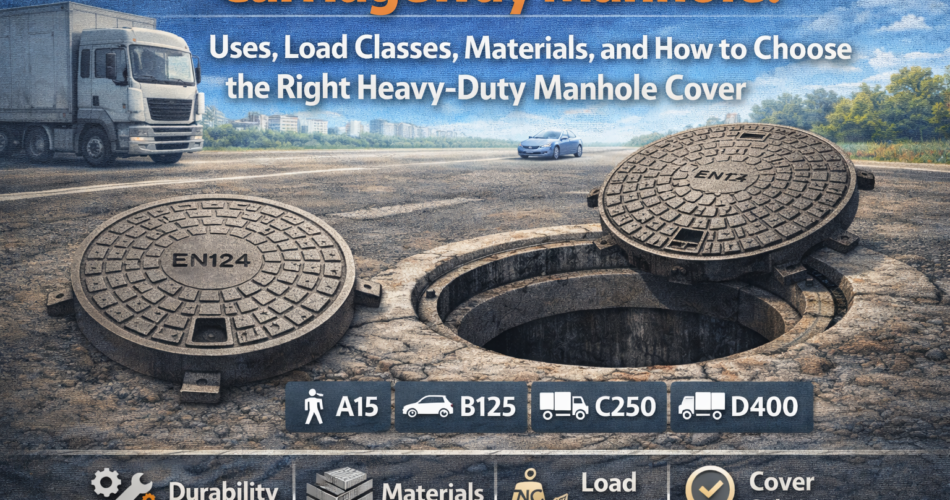
A carriageway manhole is a heavy-duty access cover system designed for areas exposed to moving vehicles and regular traffic load. Unlike light-duty covers used in pedestrian or landscaped zones, carriageway manholes are built for more demanding environments such as roads, highways, industrial yards, parking areas, transport corridors, and municipal utility networks. Their job is straightforward but critical: provide safe access to underground chambers while maintaining surface safety, structural durability, and long-term reliability under load.
In practical terms, a carriageway manhole is not something that can be selected casually. If the wrong cover is used in a traffic-bearing area, the result is predictable—cracking, rocking, premature failure, unsafe road conditions, and expensive replacement work. That is why engineers, contractors, municipal buyers, and infrastructure planners need to look beyond basic size and price. Load suitability, material quality, dimensional accuracy, and manufacturing standards all matter.
For a manufacturer like Aris Foundry, with experience in grey iron and ductile iron castings for infrastructure, public works, and utility applications, carriageway manholes are part of a broader category of products that must perform in real conditions, not just satisfy a drawing.
What Is a Carriageway Manhole?
A carriageway manhole is a manhole cover and frame assembly designed specifically for carriageways or vehicle-bearing surfaces. The term “carriageway” generally refers to the part of the road used by vehicular traffic. That makes a carriageway manhole different from standard access covers used in non-traffic areas.
These manholes are commonly installed over underground chambers that provide access to drainage lines, sewer networks, utility chambers, cable routes, valve points, and inspection systems. Because they sit in traffic zones, they must be engineered to withstand repeated wheel loads, vibration, environmental exposure, and long service cycles.
Why Carriageway Manholes Matter
A carriageway manhole is a basic infrastructure component, but its failure can create immediate safety and operational problems. That is why proper product selection matters more than many buyers admit.
Supports Traffic-Bearing Infrastructure
The main role of a carriageway manhole is to provide access to underground services without compromising the performance of the road or paved traffic surface above it.
Improves Public and Vehicle Safety
A badly fitted, weak, or damaged manhole cover in a traffic lane is an obvious hazard. A properly designed carriageway manhole reduces the risk of displacement, breakage, and unsafe surface conditions.
Protects Underground Chambers
The cover and frame protect the chamber below from external load, debris entry, accidental damage, and environmental exposure while still allowing maintenance access when required.
Reduces Maintenance Problems
If the cover is properly selected and manufactured, it stays stable, fits correctly, and performs consistently over time. That means fewer complaints, fewer repairs, and less disruption.
Common Applications of Carriageway Manhole
The demand for carriageway manhole systems comes from any infrastructure environment where underground access points are located in areas exposed to vehicular traffic.
Public Roads and Streets
Municipal roads, internal roads, service roads, and urban traffic corridors often require carriageway manholes for sewer, drainage, and utility access.
Highways and Transport Infrastructure
Access chambers located in transport-linked surfaces need covers capable of handling high and repeated traffic loads.
Industrial Areas and Factory Yards
Industrial compounds, logistics parks, loading zones, and manufacturing premises often use carriageway manholes in areas exposed to heavy vehicles and operational movement.
Commercial Complexes and Parking Areas
Parking surfaces, service bays, and access roads within commercial developments also require manhole systems designed for vehicle load conditions.
Utility and Civic Infrastructure
Stormwater chambers, sewer inspection points, cable chambers, and underground service systems often depend on carriageway manholes for safe and durable access.
Load Classes and Why They Matter
Load class is one of the most important considerations when selecting a carriageway manhole. This is exactly where careless sourcing goes wrong. A cover that looks strong is meaningless if it is not rated for the actual traffic condition.
In many infrastructure applications, carriageway manholes are selected with reference to recognized load classifications used in standards such as EN124. These classifications help define whether a cover is suited to pedestrian zones, light vehicle movement, or full carriageway traffic conditions.
For carriageway use, higher load-bearing classes are typically required because the cover must withstand repeated vehicular load without structural failure or instability. The exact class should always be matched to the actual installation environment. Using an underspecified product in a traffic-bearing area is not a cost saving. It is a mistake waiting to turn into a site problem.
Materials Used for Carriageway Manhole Manufacturing
Material choice directly affects the performance, toughness, service life, and reliability of a carriageway manhole.
Cast Iron Carriageway Manhole
Cast iron has long been used in manhole and drainage applications because of its strength, rigidity, and suitability for heavy-duty cast products. It remains a dependable option in many utility and public works projects.
Ductile Iron Carriageway Manhole
Ductile iron is often the preferred material for carriageway manholes because it offers better toughness, higher impact resistance, and stronger mechanical performance under demanding service conditions. In traffic-bearing applications, this added resilience matters. For many modern infrastructure projects, ductile iron is the more practical choice where long-term durability and load performance are priorities.
Key Features to Look for in a Carriageway Manhole
A carriageway manhole should be evaluated as a working infrastructure product, not just a metal cover.
High Load-Bearing Capacity
This is non-negotiable. The cover and frame must be suited to the actual traffic condition of the installation area.
Stable Frame and Cover Seating
A carriageway manhole must sit properly in its frame and remain stable under repeated movement. Loose fitting creates noise, wear, surface damage, and safety issues.
Dimensional Accuracy
Poor dimensions lead to bad installation, rocking covers, uneven road finish, and faster deterioration. Accuracy matters from production to installation.
Material Integrity
The casting should be free from structural defects that compromise load-bearing performance or service life.
Corrosion Resistance and Durability
Roadside and utility environments expose products to water, dirt, chemicals, vibration, and weather. Material quality and suitable finishing influence long-term performance.
Ease of Access for Maintenance
Even a heavy-duty carriageway manhole must remain practical for inspection and utility access. Good design balances strength with serviceability.
How to Choose the Right Carriageway Manhole
Choosing the right carriageway manhole requires practical evaluation of the site and the service demands.
Understand the Traffic Environment
Start with the location. Is the manhole going into a municipal road, industrial yard, parking zone, service road, or heavy vehicle area? That directly affects the load requirement.
Match the Product to the Underground Function
The chamber below may be part of a sewer line, drainage system, cable route, or utility access point. Size, opening clear area, and cover design should match that function properly.
Check the Required Load Class
Do not assume all heavy covers are equivalent. The required load rating should align with the real use condition, not the supplier’s sales pitch.
Choose the Right Material
For high-performance traffic-bearing applications, ductile iron is often the better option. Cast iron may also be suitable depending on the project and specification.
Evaluate Manufacturing Quality
A carriageway manhole is only as reliable as the foundry that made it. Look for manufacturers with proper process control, testing capability, and experience in infrastructure castings.
Avoid Cheap, Weak Alternatives
This is where procurement often fails. Buying an underspecified or poorly made product because it is cheaper usually ends with replacement, complaints, and avoidable repair costs.
Why Manufacturing Quality Matters in Carriageway Manholes
A carriageway manhole operates under some of the harshest conditions faced by utility castings. It is exposed to traffic load, impact, vibration, water, dirt, and repeated service cycles. That means weak casting quality shows up fast.
Good manufacturing starts with proper pattern development, controlled metal quality, sound moulding, dimensional consistency, and reliable inspection. It also requires understanding how the product will actually perform in the field. A heavy-looking cover is not enough. The structure, seating, and integrity must be right.
With modern foundry infrastructure, in-house machining capability, testing facilities, and experience manufacturing grey iron and ductile iron products for public works and utility applications, Aris Foundry is equipped to support carriageway manhole requirements with dependable production quality.
Carriageway Manhole in Modern Infrastructure
As cities grow and transport-linked infrastructure expands, the role of the carriageway manhole remains essential. Roads, drainage systems, sewers, underground utilities, and inspection chambers all depend on access points that can survive demanding surface conditions.
That is why a carriageway manhole should be treated as a serious engineering component. In municipal and industrial infrastructure, it supports both access and safety. When chosen properly, it helps maintain the function of underground systems without weakening the traffic surface above.
Why the Right Manufacturer Makes a Difference
A poor-quality carriageway manhole creates predictable problems:
cracking under traffic
unstable or noisy seating
unsafe road conditions
repeated maintenance issues
faster replacement cycles
A reliable manufacturer helps reduce those risks through:
better material control
stronger dimensional consistency
more dependable load-bearing performance
application-focused manufacturing
support for standard and project-specific requirements
That is what separates a durable infrastructure product from a short-lived site problem.
Conclusion
A carriageway manhole is a critical access and safety component in roads, utility networks, drainage systems, industrial areas, and traffic-bearing infrastructure. It must withstand vehicular loads, protect underground chambers, maintain stable seating, and provide long-term service under demanding conditions.
The right carriageway manhole should be selected based on load class, application, material, dimensional accuracy, and manufacturing quality. For engineers, contractors, and infrastructure buyers, the sensible approach is to work with a manufacturer that understands real-world casting performance.
With decades of experience in cast iron and ductile iron products for municipal, utility, and infrastructure applications, Aris Foundry is well positioned to support carriageway manhole requirements with durable, quality-focused casting solutions.