
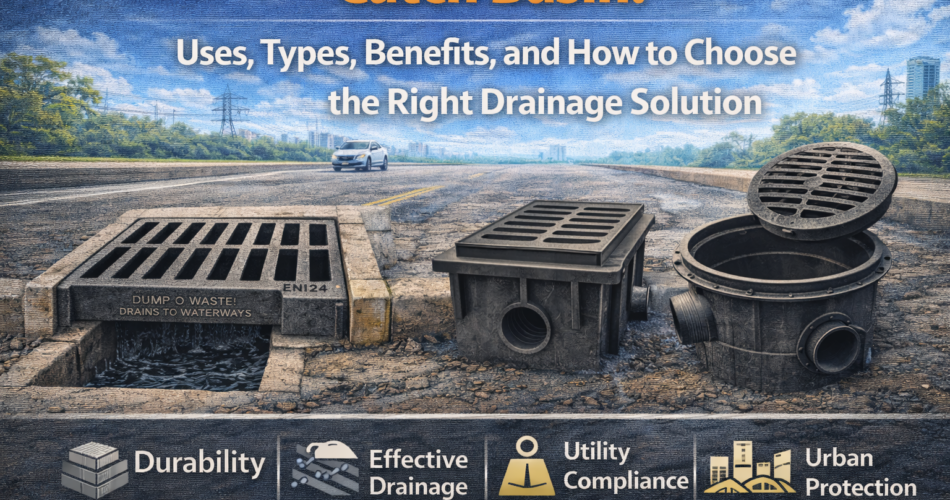
In drainage and stormwater management systems, water control is not something that can be left to chance. If runoff is not collected and directed properly, the result is waterlogging, surface damage, erosion, and higher maintenance costs. That is where a catch basin becomes important. It is one of the most practical drainage components used in roads, public infrastructure, industrial sites, commercial developments, and residential projects to collect surface water and manage debris before it enters the drainage network.
A lot of people treat a catch basin like just another drain opening. That is inaccurate. A properly designed catch basin does more than collect water. It helps improve drainage efficiency, reduces blockage risk, protects underground systems, and supports safer surface conditions. If the product is badly made or poorly selected, the system becomes harder to maintain and more likely to fail over time.
For contractors, engineers, municipalities, and project planners, choosing the right catch basin is a basic part of building durable infrastructure.
What Is a Catch Basin?
A catch basin is a drainage chamber designed to collect rainwater or surface runoff and direct it into an underground drainage system. It usually includes a grate or cover at the top and a sump area below that helps trap silt, debris, and sediment before they move deeper into the drainage line.
This matters because water alone is not the only issue in drainage systems. Sand, leaves, dirt, and waste material also flow into drains. A catch basin helps intercept much of that material, which supports better system performance and easier maintenance.
Why Catch Basins Are Important
A drainage network without proper collection points is incomplete. Catch basins are important because they help control both water flow and debris management.
Surface water collection
A catch basin collects runoff from roads, pavements, parking areas, industrial surfaces, and open spaces, helping reduce water accumulation.
Debris interception
The sump area traps dirt, sediment, and larger particles before they enter the drainage line, reducing the risk of clogging further downstream.
Protection of drainage systems
By managing debris and water entry more effectively, a catch basin helps support the long-term performance of the underground network.
Improved safety
Standing water on roads, industrial yards, or public walkways creates risk. A properly placed catch basin helps reduce that problem.
Where Catch Basins Are Commonly Used
A catch basin is used in many environments because surface runoff management is a basic requirement across infrastructure and development projects.
Roads and highways
Catch basins are widely used along road edges, intersections, and medians to collect rainwater and direct it into stormwater systems.
Municipal drainage systems
Urban infrastructure depends on drainage chambers that can collect runoff and help manage debris effectively.
Industrial premises
Factories, warehouses, and processing areas often use catch basins in washdown zones, open yards, and utility areas.
Commercial and residential developments
Parking areas, internal roads, landscaped spaces, and building surroundings often include catch basins as part of site drainage planning.
Public works and infrastructure projects
Airports, ports, transit areas, civic developments, and utility corridors often require durable drainage chambers for long-term use.
Main Components of a Catch Basin
A catch basin usually includes several basic elements that work together as one drainage unit.
Grate or top cover
This is the visible top section that allows water to enter while helping block large debris or accidental entry into the chamber.
Basin chamber
The chamber holds incoming water and provides internal space for water movement and debris collection.
Sump area
The lower portion of the catch basin collects sediment, dirt, and waste material before it can move into the connected pipeline.
Outlet connection
This is the point where collected water exits the basin and flows into the underground drainage network.
Each part matters. If one element is poorly designed or poorly manufactured, the whole drainage point becomes less effective.
Types of Catch Basins
Not all catch basins are identical. The right type depends on location, load condition, water volume, and project design.
Roadside catch basins
These are used along roads and streets to collect stormwater runoff from paved surfaces.
Yard or area catch basins
These are installed in open yards, parking zones, industrial premises, and landscaped areas where water collection is needed over a flat surface.
Heavy-duty catch basins
Used in traffic-prone or industrial environments, these are built for higher load conditions and tougher service requirements.
Utility and project-specific catch basins
Some projects require custom size, shape, or outlet configuration based on site design and drainage performance needs.
Materials Used in Catch Basin Manufacturing
Material selection matters because a catch basin is exposed to moisture, dirt, weight load, repeated use, and environmental wear. Poor-quality material or weak casting will not hold up for long.
Cast iron catch basin components
Cast iron is widely used for grates, covers, and related drainage castings because it offers good strength and durability for many drainage applications.
Benefits of cast iron
- Good compressive strength
- Suitable for municipal and infrastructure use
- Durable in outdoor service conditions
- Cost-effective for project-scale requirements
Ductile iron catch basin components
Ductile iron offers better toughness and improved resistance to impact and stress. It is often preferred where higher load-bearing performance is needed.
Benefits of ductile iron
- Better toughness
- Improved impact resistance
- Suitable for demanding service environments
- Strong option for traffic and heavy-use areas
The reality is simple: material choice matters, but foundry quality matters just as much. A poorly manufactured product will cause problems regardless of the material label.
What Makes a Good Catch Basin?
A good catch basin should do more than sit in the ground and collect water. It should perform reliably under real operating conditions.
Strong structural quality
The basin and its top components should be able to handle expected site load and environmental conditions.
Proper water entry design
The grate or opening should allow efficient water collection without becoming a frequent blockage point.
Debris management capability
A catch basin should support sediment collection in a way that makes cleaning and maintenance practical.
Dimensional accuracy
Covers, grates, and connected parts should fit correctly. Poor fit leads to instability, noise, breakage risk, and maintenance difficulty.
Long-term durability
The product should withstand exposure to water, dirt, traffic, and repeated service over time without premature failure.
How to Choose the Right Catch Basin
If you are sourcing a catch basin, do not make the common mistake of choosing only by price or approximate size. That is weak buying logic and it usually creates future maintenance problems.
Match the product to the application
A catch basin used in a landscaped area is different from one used on a roadway or industrial yard. Load condition and runoff volume matter.
Check material suitability
Cast iron and ductile iron each have their place. The correct choice depends on actual service and load requirements.
Evaluate drainage performance needs
Think about runoff volume, debris load, maintenance access, and outlet connection requirements.
Review manufacturer capability
This is where many buyers get careless. A good product depends on good manufacturing, not just a product name in a quotation.
Think in lifecycle terms
A cheaper product that cracks, shifts, or causes repeated maintenance is not economical. It is just poorly selected.
Why Manufacturer Quality Matters
A catch basin is only as reliable as the manufacturing quality behind it. Product performance depends on material control, casting integrity, dimensional consistency, and proper process discipline.
A capable manufacturer offers real advantages:
Better casting quality
Controlled raw materials and moulding practices improve durability and structural reliability.
Stronger dimensional accuracy
Better process control means better fitting components and fewer field problems.
More consistent supply
Project buyers need repeat quality, not one acceptable batch followed by inconsistent product.
Better application understanding
Experienced manufacturers understand how drainage products are actually used and what they must withstand in the field.
Why Aris Foundry Is Relevant for Catch Basin Requirements
For buyers looking for dependable drainage and utility castings, Aris Foundry is relevant because its manufacturing capabilities align well with infrastructure product requirements. Aris Foundry is an ISO 9001:2015 certified foundry with over 35 years of experience in producing grey iron and ductile iron castings for municipal utilities, public works, industrial applications, and infrastructure sectors.
That matters because catch basin components such as grates, covers, and related cast products are not decorative items. They are functional drainage castings used in environments where strength, dimensional accuracy, and long-term durability matter. Aris Foundry’s manufacturing infrastructure includes modern foundry technology, multiple moulding lines, in-house machining, laboratory testing, fabrication support, and adherence to international standards such as EN124, ASTM, and BS.
Its experience across municipal utilities, industrial castings, and infrastructure-focused product categories makes it a practical manufacturing partner for catch basin requirements.
Common Mistakes Buyers Should Avoid
Many drainage failures start with poor sourcing decisions.
Buying only on lowest price
This often leads to weaker product quality, shorter service life, and higher maintenance cost.
Ignoring load conditions
A catch basin for light-duty use is not enough for traffic-prone or industrial environments.
Overlooking maintenance needs
A product that is hard to clean or poorly designed for debris collection will create operational problems later.
Assuming all drainage castings are the same
They are not. Material quality, casting integrity, fit, and durability vary significantly between manufacturers.
Conclusion
A catch basin is an essential part of effective drainage infrastructure. It helps collect surface runoff, trap debris, protect underground drainage systems, and improve safety across roads, industrial sites, public works, and development projects. The right catch basin should offer strong construction, proper drainage performance, durability, and dependable long-term service.
For buyers who care about real field performance rather than short-term compromise, manufacturing quality matters. With its experience in grey iron and ductile iron castings, infrastructure-focused production capability, and commitment to quality standards, Aris Foundry is well positioned to support catch basin requirements with durable and practical casting solutions.