
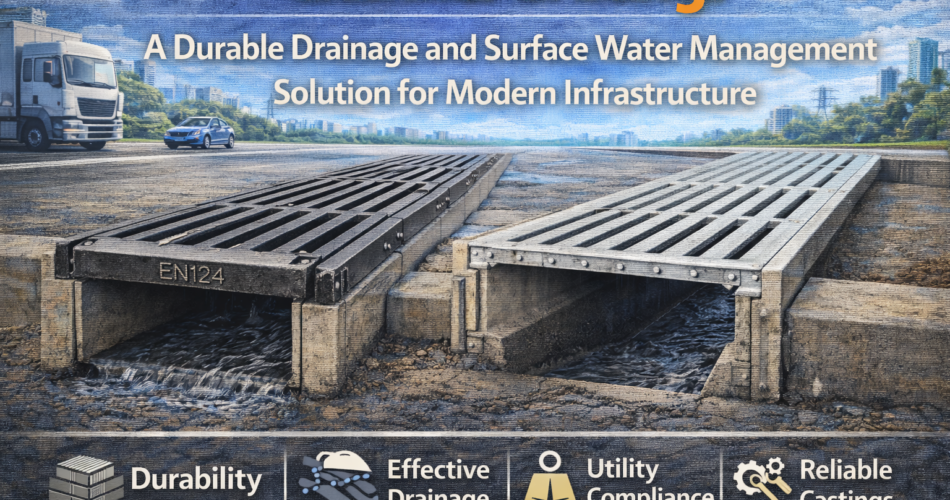
In infrastructure, construction, and industrial projects, drainage performance is one of those things people ignore until it fails. Once water starts collecting on roads, factory floors, walkways, loading areas, or public utility zones, the cost of bad planning becomes obvious. That is where channel grating becomes important. It is not just a covering element placed over a drain. It is a functional part of surface water management that supports safety, durability, and smooth site operations.
For contractors, project consultants, builders, municipal authorities, and industrial buyers, selecting the right channel grating is a practical engineering decision. The product must be strong enough to handle the intended load, durable enough to resist outdoor exposure, and reliable enough to remain stable over years of use. Weak grating systems create drainage inefficiency, surface hazards, maintenance trouble, and premature replacement cost.
For a manufacturer like Aris Foundry, which specializes in cast iron and ductile iron products for infrastructure, utilities, and public works, channel grating fits directly into the larger need for dependable drainage and access-related casting solutions. With over 35 years of foundry experience, ISO 9001:2015 certification, in-house testing capability, and standards-focused manufacturing, the company is positioned to support infrastructure-grade casting requirements where product quality matters.
What Is Channel Grating?
Channel grating is a protective and load-bearing grate placed over a drainage channel to allow water flow while preventing debris accumulation and maintaining a usable surface above the drain. It is commonly installed in linear drainage systems where water needs to be collected and directed away efficiently.
The basic purpose of channel grating is simple. It allows surface runoff to enter the drainage system while helping protect the drain opening from larger debris and supporting safe movement of pedestrians, equipment, or vehicles depending on the application.
Channel grating is commonly used in:
- roads and pavements
- industrial facilities
- factory floors
- public walkways
- parking areas
- loading zones
- municipal drainage systems
- commercial and residential developments
Why Channel Grating Matters in Real Infrastructure Work
A lot of drainage products are judged only by appearance or initial cost. That is poor thinking. A channel grating is part of an active drainage system. If it fails, shifts, cracks, clogs too easily, or cannot handle the applied load, the entire area becomes less safe and less functional.
A properly manufactured channel grating helps support:
Efficient Surface Drainage
It allows rainwater and runoff to enter the channel quickly, helping reduce water accumulation on the surface.
Safer Movement Across the Area
A stable grating helps create a safer walking or driving surface in locations where an open drain would otherwise be hazardous.
Protection of Drainage Channels
The grate reduces the chance of larger debris entering and obstructing the system below.
Long-Term Durability
A quality grating system performs better under repeated use, weather exposure, and site stress.
Better Site Maintenance
Proper channel grating makes drainage systems more manageable by supporting both performance and access.
Common Applications of Channel Grating
Channel grating is widely used across civic, industrial, and commercial infrastructure. The actual design and material depend on where the system is being installed and what kind of traffic or exposure it must handle.
Channel Grating for Municipal, Industrial, and Commercial Use
Roadside and Municipal Drainage
Cities and public works departments use channel grating in roads, curbs, pedestrian pathways, service lanes, and utility corridors where stormwater and runoff need to be collected efficiently.
Industrial Premises
Factories, warehouses, workshops, and process plants often install channel grating in service zones, movement paths, washdown areas, and drainage-sensitive workspaces.
Parking and Loading Areas
Parking spaces, logistics yards, and loading bays require durable drainage grates that can perform under repeated vehicle movement and operational use.
Commercial Complexes
Shopping centres, office campuses, hotels, hospitals, and business parks use channel grating where drainage must work without disturbing the finished look and function of the space.
Residential and Township Projects
Housing developments, internal roads, landscaped zones, and common-area drainage systems often use channel grating as part of organized site water management.
Why Material Selection Is Critical
This is where many buyers go wrong. They assume all gratings are basically the same as long as the opening size looks right. That is false. The material determines strength, durability, service life, and suitability for the actual installation environment.
For infrastructure and drainage applications, cast iron and ductile iron remain two of the most practical and dependable material choices.
Cast Iron Channel Grating
Cast iron is widely used in drainage and utility applications because of its durability, compressive strength, and suitability for robust casting designs. It performs well in many standard infrastructure and public works environments.
Ductile Iron Channel Grating
Ductile iron offers higher strength, better toughness, and improved impact resistance. It is often the better choice where the grating is exposed to heavier loading, more demanding site conditions, or higher durability expectations.
The correct material should be selected based on how and where the product will be used. A pedestrian walkway and an industrial vehicle zone are not the same job, so they should not be treated as if they are.
What Buyers Should Check Before Choosing Channel Grating
A channel grating should never be selected on quotation value alone. That is how short-term procurement creates long-term site problems. Serious buyers need to assess the product on real performance criteria.
Channel Grating: Key Features That Actually Matter
Load-Bearing Capability
The grating must match the actual service condition. It should be designed for pedestrian, light vehicle, or heavy-duty use depending on the site.
Structural Stability
A good grating should seat properly, remain stable in its frame or channel, and resist movement during regular use.
Drainage Efficiency
The design should allow effective water entry without unnecessarily restricting flow or causing easy blockage.
Material Integrity
The casting quality must be sound, with proper structural strength and dimensional consistency.
Corrosion and Weather Resistance
Outdoor drainage products face water, dust, humidity, and environmental contamination. The material and finish should support long-term serviceability.
Maintenance Practicality
The grating should allow practical cleaning and inspection of the channel below without becoming a maintenance burden.
Manufacturing Accuracy
Poorly made gratings can rock, misfit, or wear unevenly. Dimensional consistency matters more than many buyers realize.
Why Foundry Capability Is More Important Than Catalog Claims
A catalog can show a neat product photo. That tells you almost nothing about how well the grating will perform after installation.
The real difference comes from foundry capability. Channel grating quality depends on moulding accuracy, material control, production consistency, finishing quality, and testing discipline. Weak manufacturing control leads to weak products, even if the design looks acceptable on paper.
Aris Foundry offers several strengths that matter directly in this category:
Experience in Infrastructure and Utility Castings
With more than 35 years of industry experience, the company understands the performance requirements of drainage, public works, and industrial casting applications.
ISO 9001:2015 Certified Manufacturing
A structured quality system supports consistency and helps ensure better process control.
Modern Foundry Infrastructure
The company operates from a large manufacturing facility with multiple moulding lines, in-house machining support, testing capability, and fabrication resources suited to infrastructure-grade casting production.
In-House Testing Facilities
Chemical and physical testing capability, including load-related testing support, helps improve confidence in product quality and reliability.
Standards-Oriented Approach
Manufacturing aligned with standards such as EN124, ASTM, and BS reflects a serious engineering mindset, which is exactly what drainage and public works applications require.
The Cost of Choosing Poor-Quality Channel Grating
This is where reality hits. Cheap grating often looks acceptable when delivered, but failure shows up later in the form of cracking, shifting, poor drainage performance, corrosion, repeated maintenance, and unsafe site conditions.
That leads to:
- replacement cost
- labour and installation disruption
- drainage blockage issues
- public or workplace safety risks
- reduced site reliability
- higher long-term maintenance expense
The cheapest product at purchase is often the most expensive product over its working life. That is not theory. That is how bad procurement usually plays out in construction and infrastructure projects.
Why Aris Foundry Is Relevant for Channel Grating Requirements
Aris Foundry manufactures grey iron and ductile iron products used in infrastructure, utility, public works, and construction environments across domestic and export markets. Its manufacturing depth, foundry discipline, and infrastructure-oriented approach make it relevant for buyers looking for dependable drainage casting solutions rather than low-grade commodity supply.
The company’s focus on quality, product development, safety, and customer satisfaction fits well with the needs of project-driven clients who require channel grating products that are built to perform in actual field conditions, not just pass a basic visual check.
Conclusion
Channel grating is not a secondary accessory in a drainage system. It is a working component that affects water management, site safety, structural reliability, and maintenance efficiency. Whether the application is municipal, commercial, residential, or industrial, the quality of the grating directly affects how well the drainage system performs over time.
That is why product quality, material selection, and manufacturing capability matter. Weak grating creates avoidable problems. Strong, well-manufactured grating supports better infrastructure performance and lower lifecycle cost.
For buyers seeking durable cast iron and ductile iron drainage solutions, Aris Foundry offers the manufacturing strength, quality systems, and application-oriented experience needed for reliable channel grating supply. In any project where drainage matters, choosing the right grating is not a minor choice. It is the correct engineering decision.