
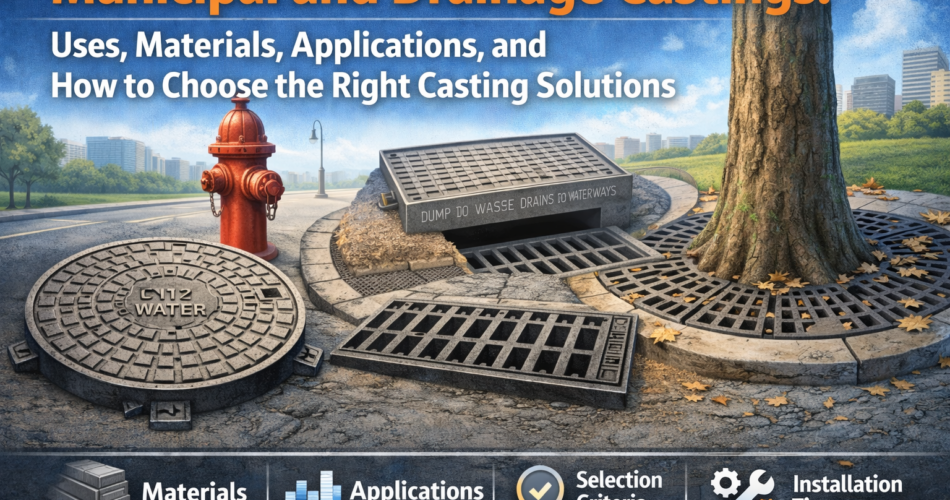
Municipal and drainage castings are essential to the safe and efficient functioning of modern infrastructure. They are used in roads, footpaths, public utility systems, drainage networks, water supply lines, sewer systems, commercial developments, and industrial projects where durability, access, and long-term performance matter. These cast products may not always be the most visible part of a project, but they are among the most important.
When municipal and drainage components fail, the consequences are immediate. Roads become unsafe, drainage systems clog or overflow, maintenance becomes more difficult, and replacement costs rise. That is why these castings should never be treated as low-priority procurement items. They are working infrastructure products that must withstand load, weather, traffic, water exposure, debris, and repeated field use.
For infrastructure buyers, consultants, contractors, and civic bodies, the right casting solution depends on application, material, load condition, and manufacturing quality. As an ISO 9001:2015 certified manufacturer of grey iron and ductile iron products for infrastructure and public works, Aris Foundry understands that dependable municipal and drainage castings are a basic requirement for strong utility systems and long-term civic development.
What Are Municipal and Drainage Castings?
Municipal and drainage castings are cast iron or ductile iron products used in public infrastructure and water management systems. These include access covers, frames, gratings, boxes, utility covers, and related components that support drainage flow, underground access, utility protection, and public safety.
They are commonly installed in urban roads, drainage channels, sewer lines, stormwater systems, industrial sites, civic infrastructure, and utility networks. Their role is functional, not decorative. These castings help manage runoff, protect underground systems, provide inspection access, and support safe movement across built environments.
Why Municipal and Drainage Castings Matter
A lot of infrastructure problems begin with weak components. That is especially true in drainage and utility systems. If the castings are poor, the system becomes harder to maintain and more expensive to keep operational.
Support Public Safety
Manhole covers, gratings, and access frames installed in public areas must remain stable and durable. Damaged or underspecified products create direct hazards for pedestrians, vehicles, and maintenance teams.
Improve Drainage Performance
Drainage castings such as gratings and channel covers help move water into the system while controlling debris entry. Properly selected products improve runoff handling and reduce blockage risk.
Protect Underground Utilities
Municipal access products protect service points, chambers, and underground control systems from impact, contamination, and accidental interference.
Reduce Maintenance and Replacement Costs
Strong, well-manufactured castings usually perform better over time. That means fewer failures, fewer complaints, and less recurring repair work.
Common Types of Municipal and Drainage Castings
The category of municipal and drainage castings includes a wide range of products used across public works and utility systems.
Manhole Covers and Frames
These are among the most widely used municipal castings. They provide access to sewer lines, stormwater systems, cable chambers, and inspection points while maintaining safe surface conditions.
Gully Gratings
Gully gratings are installed over drainage inlets to allow stormwater entry while blocking larger debris. They are commonly used in roadsides, footpaths, industrial sites, and civic drainage systems.
Channel Gratings
Channel gratings are used over linear drains in commercial premises, roads, industrial compounds, and public spaces where efficient surface water collection is required.
Surface Boxes and Service Boxes
These products provide access to underground valve points, stopcocks, and utility controls while protecting them from external conditions and allowing easier maintenance.
Catch Basin Covers and Drainage Components
Catch basin castings are used in stormwater collection systems where runoff must be directed into underground drains while trapping sediment and solid waste.
Recessed and Specialty Access Covers
In projects where both access and surface finish matter, recessed type covers and other specialized municipal castings may be used.
Where Municipal and Drainage Castings Are Used
Municipal and drainage castings are used across a broad range of infrastructure environments because drainage and underground access are basic requirements in almost every developed space.
Urban Roads and Public Streets
Road networks use castings for drainage inlets, utility chambers, sewer access points, and stormwater management.
Footpaths and Public Utility Areas
Pedestrian zones, civic walkways, service corridors, and utility-side spaces require durable castings that support safety and access.
Commercial and Residential Developments
Townships, office parks, shopping complexes, and residential projects need reliable drainage and utility access systems built into their external infrastructure.
Industrial and Factory Premises
Industrial compounds often require heavy-duty drainage and access products due to operational runoff, vehicle movement, and service demands.
Municipal Water and Sewer Networks
Public drainage systems, sewer inspection chambers, valve control points, and service infrastructure all depend on durable cast components.
Materials Used in Municipal and Drainage Castings
Material choice is one of the biggest factors in performance. A poorly chosen material can shorten service life, reduce impact resistance, and increase replacement frequency.
Grey Iron Castings
Grey iron is widely used in municipal and drainage products because of its strength, castability, and cost-effectiveness. It remains a practical option for many infrastructure applications.
Ductile Iron Castings
Ductile iron is often preferred where greater toughness, higher impact resistance, and stronger mechanical performance are required. In demanding public works and drainage installations, ductile iron is frequently the better choice for long-term performance.
For many infrastructure projects, the selection between grey iron and ductile iron should be based on actual service condition, load exposure, and performance expectation rather than habit or lowest price.
Key Features to Look for in Municipal and Drainage Castings
Not all castings sold into the market are worth using. Some products are fine on paper and weak in service. That is why buyers need to evaluate more than size and rate.
Load-Bearing Suitability
The product must match the installation environment. A casting used in a pedestrian zone is not automatically suitable for a carriageway or industrial yard.
Dimensional Accuracy
Poor dimensions create installation issues, rocking covers, unstable frames, and alignment problems that lead to faster failure.
Structural Integrity
The casting should be sound, consistent, and free from major defects that reduce performance or safety.
Corrosion and Weather Resistance
Municipal and drainage products are exposed to water, mud, chemicals, waste, and changing weather. Material quality and suitable finishing affect durability.
Stable Fit and Seating
A good cover or grating should sit correctly in its frame and remain stable during use. Unstable seating is a common cause of noise, wear, and safety complaints.
Ease of Maintenance Access
Municipal castings should support inspection, cleaning, and service work without unnecessary difficulty.
How to Choose the Right Municipal and Drainage Castings
Choosing the right municipal and drainage castings requires real evaluation of the site, function, and long-term use conditions.
Understand the Application Clearly
Start with the actual purpose of the product. Is it for sewer access, stormwater intake, valve protection, roadside drainage, or utility inspection? The correct casting depends on the function.
Check the Installation Environment
A product installed in a landscaped area, public footpath, busy road, or factory compound will face very different service conditions. The environment drives the specification.
Select the Right Material
Grey iron may be suitable for many applications, while ductile iron is often better where higher load, shock, and service intensity are expected.
Match the Load Requirement
Using a light-duty product in a heavy-use area is a basic mistake. The load capacity should suit the actual traffic and operational condition.
Evaluate Manufacturing Capability
A reliable foundry should have sound moulding systems, metal control, testing facilities, machining support where needed, and experience in producing infrastructure-grade castings.
Avoid Buying Only on Price
Cheap municipal castings often become expensive once they start failing in service. Cost should be considered, but not at the expense of fit, strength, and durability.
Why Manufacturing Quality Matters
Municipal and drainage castings work in hard conditions. They face traffic load, constant water exposure, silt, debris, vibration, environmental wear, and repeated maintenance activity. That means quality problems show up quickly in the field.
Good manufacturing starts with accurate patterns, controlled melting, sound moulding, consistent material quality, proper finishing, and reliable inspection. It also requires an understanding of how the product will actually be used.
Aris Foundry’s infrastructure is relevant in this context because utility castings need serious production discipline. With a large-scale manufacturing facility, in-house machining capability, laboratory testing support, multiple moulding lines, and experience in products aligned with international standards such as EN124, ASTM, and BS, the company is equipped to support municipal and drainage casting requirements for demanding projects.
Municipal and Drainage Castings for Modern Infrastructure
As cities expand and infrastructure systems become more demanding, the need for durable municipal and drainage castings continues to grow. Roads, drainage systems, sewer networks, utility chambers, industrial facilities, and commercial developments all depend on cast components that are safe, practical, and built for long-term use.
These products are not minor accessories. They are part of the operating foundation of modern infrastructure. When they are selected correctly and manufactured well, they help keep public systems functional, maintainable, and safer.
Why the Right Manufacturer Makes a Difference
A poor casting supplier usually creates the same set of problems:
weak product quality
unstable fit
faster corrosion or wear
repeated maintenance issues
higher replacement cost
A reliable manufacturer brings:
better material control
stronger dimensional consistency
more dependable field performance
support for standard and custom requirements
a practical understanding of infrastructure use
That difference matters in real projects where the product has to work for years, not just pass delivery.
Conclusion
Municipal and drainage castings are a critical part of infrastructure, public works, and utility systems. They support drainage performance, public safety, underground access, and long-term service reliability across roads, civic spaces, industrial premises, and development projects.
The right casting solution should be selected based on application, load condition, material, fit, and manufacturing quality. For project planners, municipal buyers, contractors, and infrastructure developers, the sensible approach is to work with a foundry that understands these requirements in depth.
With decades of experience, modern manufacturing capability, and expertise in grey iron and ductile iron products for utility and infrastructure use, Aris Foundry is well positioned to support municipal and drainage casting requirements with durable, quality-focused solutions.